Key Moments
Core Concept Introduction
Understanding the fundamental principles that form the foundation of this topic.Practical Implementation
Step-by-step guide to applying these concepts in real-world scenarios.Common Challenges
Identifying and addressing the most frequent obstacles encountered.Best Practices
Industry-proven approaches for optimal results and efficiency.Future Considerations
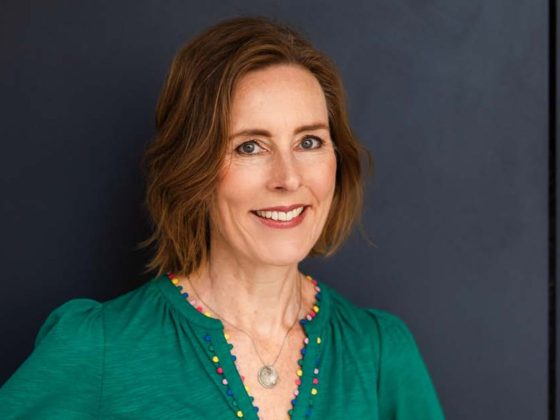
Emerging trends and developments to watch in this space.Helen Packham, a verbal communications strategist and TEDx curator, argues that storytelling — not AI — remains the strongest tool for genuine connection in business communication. Drawing on her own career and a period of lost confidence after maternity leave, she explains why lived, personal experience is what makes a message land, and why AI-generated content can’t replicate that trust.
As AI reshapes how we create and communicate, the real differentiator is something older, deeply human, and hiding in plain sight.
There’s something staring us in the face at the moment.
It’s been there the whole time, doing its job under the radar, shaping how we connect and make sense of things. And in the middle of all the noise about AI, productivity and output, it’s being glaringly missed.
There’s nothing particularly novel about it. It’s been part of how we operate for as long as we’ve been human.
Story.
In its everyday, most natural form, the one we’ve always relied on. The version we see as entertainment, but that also sits in the fabric of our existence, helps us make sense of things, pass something on, and bring people with us. This thread runs all the way back, long before business, strategy, and any of the structures we now rely on.

“The idea that our ability to cooperate in large groups was about shared belief, and the role story played in holding that together.”
The Thread We’re Missing
And it’s still here.
I started coaching at Virgin Atlantic when I was 19. I was young, figuring things out, but completely drawn to people. I’d watch how conversations unfolded, and how one sentence could open someone up and another could shut them down entirely.
That curiosity stayed with me as I climbed the career ladder. I moved through leadership development roles, studied psychology alongside working, specialised in behaviour, and eventually found myself working with senior leaders and leading learning and development for a division of 2,000 people.
And over that time, the same pattern kept emerging in the people I was training, coaching and supporting. The people who came to me most for help were those with a depth of knowledge, but a gap in how to make it land with impact. The skill was in learning to take something complex and make it feel clear and human.
And when that happened, you could see it straight away. The energy in the room changed. People stopped looking down, started leaning in, following along, nodding and engaging.
At the time, I wouldn’t have called it storytelling. It just felt like “people and communication skills.” Looking back now, it was much more precise than that.
Darwin, Sapiens, and the Pattern I Couldn’t Unsee
Around the same time, outside of work, I was deep in my own curiosity. I can still picture myself sitting by the window in my tiny Brighton flat, reading The Origin of Species by Charles Darwin and becoming completely transfixed.
I then read Sapiens, and my curiosity moved to humans, and the idea that our ability to cooperate in large groups was about shared belief, and the role story played in holding that together. That connection between what I was reading and what I was seeing in organisations became hard to overlook.

“Being seen and evaluated in a group carries weight. It always has.”
When Communication Stopped Working
Then there came a point where everything I thought I understood about communication stopped working for me.
After maternity leave, I walked back into environments I’d previously felt confident in and felt like a different person. Meetings that used to feel easy suddenly felt overwhelming. My body would react before I had time to think, with my heart racing, heat creeping up my neck, and panic setting in.
I remember standing in a meeting room, planning in my head how I could leave without drawing attention to myself. Which isn’t ideal when your job involves facilitating the room.
It didn’t make sense on the surface. But when I started to understand it through an evolutionary lens, it did. Being seen and evaluated in a group carries weight. It always has. That response sits deeper than confidence or capability — it’s a protective mechanism.
Writing My Way Back
For a while, I ran away and hid. I genuinely wasn’t sure I’d return to that kind of work. But something had to change, and so I started writing.
Just getting things out of my head and onto paper, trying to make sense of what had happened and where I was now. Some days it was clear, other days repetitive and a bit all over the place, but I kept going. And gradually, something started to form. There was a thread running through it all, and seeing it laid out like that gave me a different kind of clarity.
I set myself a goal that felt completely out of reach at the time: to stand on a TEDx stage and share that story. And I did, at the Brighton Dome, in front of 1,500 people. When I shared it, the response had very little to do with how well it was structured or delivered. People connected with the parts that felt familiar. They could see themselves in it, or something close to their own experience.
That level of connection was something I hadn’t been able to reach through information alone. That experience pulled me further into this work, first through my own development, and then through working with others, eventually becoming a TEDx curator and speaker coach.

“The moment something feels real, people don’t just understand it, they stay with it.”
Where We Are Now
Now, looking at where we are, it feels like we’re in a strange time.
We have AI tools that can generate words, images, voices, sometimes at a level that’s hard to distinguish from something created by a human. It’s fast, efficient and, in many ways, incredibly useful.
But it’s also changing how things are received. We now run a kind of checking process in the background when we consume something. You can feel when something is technically right but slightly detached — that uncanny valley feeling. And at the same time, genuinely human work can be questioned just as quickly.
So you end up in a weird limbo where certainty feels far less certain than it used to. And where we are now, I think people are looking for something very simple. A sense that there is a real person behind what they’re reading or listening to. Someone who has actually thought it through, lived some version of it, and is willing to stand by it.
Storytelling as the Grounding Force
This is where storytelling comes back into focus. It becomes a way of grounding what we’re saying in something real.
Tools can help shape ideas, organise them, even refine them. But they don’t carry lived experience or hold perspective in the same way. And they don’t take responsibility for what’s being put out into the world.
That part still sits with us, the humans.

“More output doesn’t automatically create more connection. And story, real story, grounded in lived experience, is still one of the clearest ways to create it.”
What This Looks Like in Business
I see this play out consistently with business owners. There’s often a strong focus on getting the message right and nailing what you do, how it works, why it’s valuable. And all of that is important.
But the moment something more personal comes into it — like where the idea came from, what led you there, what you’ve seen or learned along the way — you can feel the difference. People pay attention, connect and stay with you. They relate to what you’re saying instead of just processing it. It gives context to what you’re saying and makes it easier to understand why it matters in the first place.
Where to Start
So where do we start? Think about the people you’re speaking to. Where are they right now? What are they dealing with? What might help them see something differently, or feel a bit more steady in it? And most importantly, what do you want them to feel as a result of hearing your story? That’s where the real magic lies.
We’re surrounded by content. We have more tools than we know what to do with. But the things that stay with us tend to come back to something familiar. Something that feels considered, carries a sense of ownership, and reflects back part of our own experience and feels like it came from a real person.
And that hasn’t changed since the beginning of our human existence. More output doesn’t automatically create more connection. And story, real story, grounded in lived experience, is still one of the clearest ways to create it.

MEET THE FOUNDER
Helen Packham
Verbal Communications Strategist
Helen Packham helps entrepreneurial leaders get recognised as credible experts in their industry through the power of their words by leveraging their communication skills and articulating their unique ideas through speaking, training and events. As a speaker, Helen brings the ancient art of storytelling to the stage in a way that’s relevant, poignant and compelling. Described as “inspirational,” “a thought leader” and “courageous,” for Helen, being on stage simply feels like home. A TEDx speaker and curator, she passionately believes that everyone has TED-worthy stories inside them.